How Reykjavík is modernizing public services with a digital wallet pass
A Passcreator Success Story
An NFC wallet pass makes access to municipal services more inclusive and scalable
When access to public services depends on physical cards, the service only begins once residents are already on site. That’s too late and leads to avoidable inefficiencies: Admission cards must be issued or replaced in person, staff must manually process recurring service requests, and access remains tied to paper-based processes. A digital wallet pass for public services and facilities offers a more scalable and resident-friendly alternative for cities, municipalities, and their city administrations.
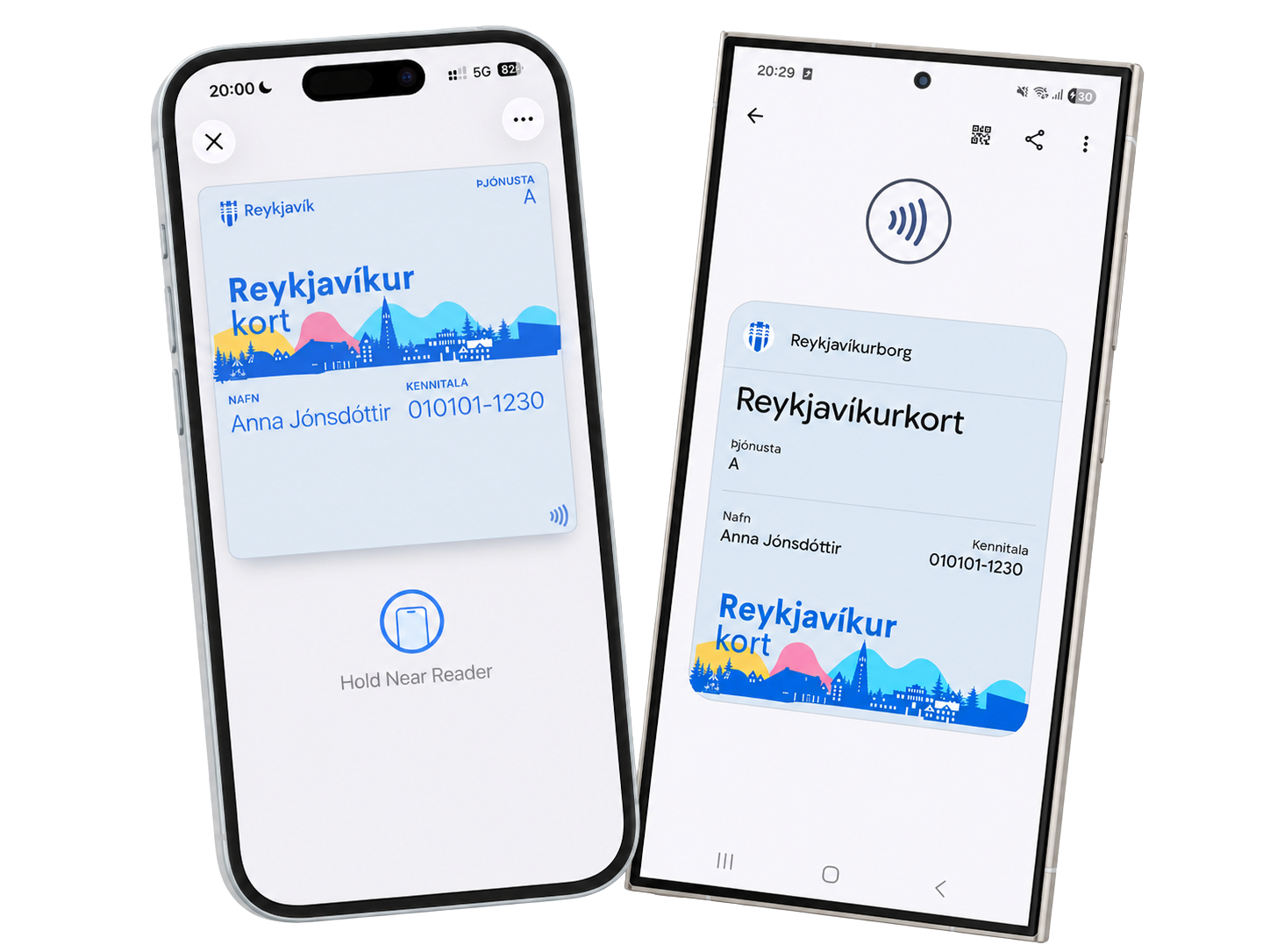
The City of Reykjavík has redesigned this process in collaboration with Passcreator. Instead of relying exclusively on physical cards, the city introduced the digital Reykjavíkurkortið as an NFC wallet pass for municipal services. Access to these services no longer begins at the counter itself, but on the user’s smartphone. No app, no additional registration steps, and no forcing residents to give up the physical option.
Earlier digital access improves the delivery of public services by cities and municipalities
In the past, Reykjavík residents relied on physical RFID cards that had to be issued, reloaded, or replaced in person. Today, access begins much earlier. With a pass in the form of a wallet card, access is possible without relying on service counters and waiting in lines, thereby reducing logistical processes and the use of plastic cards.
For Reykjavík, this means less operational overhead in managing physical cards, a clearer digital access process from the start, and a more solid foundation for gradually expanding access to additional municipal services and facilities.
A digital city wallet pass eliminates the need for extra steps when accessing services
The digital Reykjavíkurkortið is not a new, unfamiliar card format, but rather relies on integration with Apple Wallet and Google Wallet. Residents use the digital wallet pass directly on their smartphones and access supported NFC services with a simple, familiar gesture. No extra app download or detour via a QR code scan is necessary.
The model also makes the service easier to understand. Instead of treating the City Wallet Pass as a fixed entity, Reykjavík has designed the card as a modular digital city card for municipal and recreational services. Residents can activate access to swimming pools, museums, the geothermal beach, and the Family Park & Zoo according to their needs, while the city keeps the offering flexible and scalable.
Equally important is that the rollout and implementation were designed to ensure the City Pass remains inclusive. Existing cardholders can switch to the digital version for free until the end of 2026, while physical cards remain available. This lowers barriers to adoption and ensures the service continues to cater to diverse user preferences.
Clear and Step-by-Step Design of Digital Municipal Services Using NFC City Wallet Passes
The digital card was introduced in early April 2026 and is currently being issued at various locations in Reykjavík, including swimming pools, museums, the geothermal beach, and the Family Park & Zoo. This gave staff the opportunity to explain the new model directly to residents and support a controlled rollout at the issuance locations.
The phased rollout created a practical bridge between the previous card model and a more flexible digital public service. The rollout of the Wallet Pass in Reykjavík began in early April 2026 and reached approximately 5,100 passes by the end of the rollout month. By mid-May, the total number had already risen to around 10,100 Wallet Passes, about 5,000 more than in all of April. This means that the number of passes issued had nearly doubled by mid-May and had increased by about 99 percent compared to the total number in April.
Access to public services and facilities provided by cities and municipalities no longer begins only when citizens are standing at the counter.
It begins earlier, digitally, through an NFC wallet-based model that can easily be expanded to cover all public services.